नमस्ते दोस्तों! 👋
Swagat hai The Easy Master par! 🚀
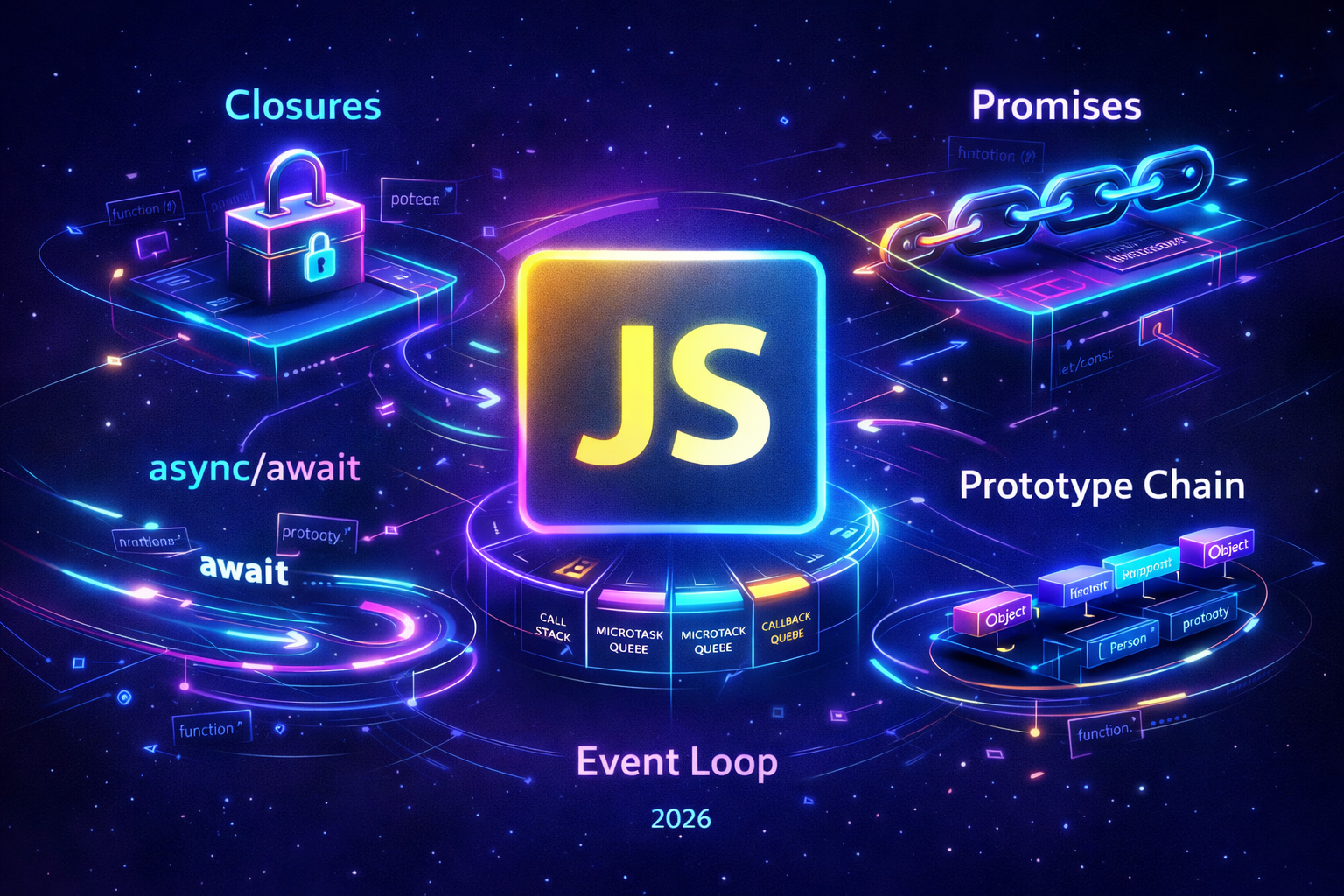
Agar aap JavaScript seekh rahe ho aur React, Node.js ya Next.js mein jaana chahte ho, toh ye 6 topics aapke liye must-master hain: var/let/const, Closures, Prototype Chain, Event Loop, Promises aur async/await.
Bahut se students inme confuse ho jaate hain. Is guide mein hum zero se hero level tak har cheez ko simple examples, real output, CodePen live demos aur diagrams ke saath samjhayenge.
Chaliye shuru karte hain!
1. var, let aur const (JavaScript Deep Dive ka Base)
Doston, ye teen keywords samajhna JavaScript ka base hai.
Quick Comparison Table:
| Keyword | Scope | Hoisting | Re-assign | Re-declare | Temporal Dead Zone |
|---|---|---|---|---|---|
| var | Function Scope | Yes | Yes | Yes | No |
| let | Block Scope | Yes | Yes | No | Yes |
| const | Block Scope | Yes | No | No | Yes |
Example – Hoisting
console.log(a); // undefined
var a = 10;

console.log(b); // ReferenceError
let b = 20;
Example – Block Scope (Sabse Important)
if (true) {
  var x = 5;     // Poora function mein visible
  let y = 10;    // Sirf is block mein
  const z = 15;  // Sirf is block mein
}

console.log(x); // 5
// console.log(y); // Error
Pro Tip: Hamesha let aur const use karo. var sirf purane legacy code mein dekho.
2. Closures in JavaScript Deep Dive
Closures JavaScript deep dive ka sabse powerful aur interview mein sabse zyada pucha jaane wala topic hai.
Closure kya hai? Jab ek inner function apne outer function ke variables ko “yaad” rakhta hai, bhale hi outer function execute ho chuka ho – usko Closure kehte hain.
Real Example – Private Counter
function createCounter() {
  let count = 0;   // Private variable

  return function() {
    count++;
    console.log("Count:", count);
  };
}

const counter1 = createCounter();
counter1(); // Count: 1
counter1(); // Count: 2

const counter2 = createCounter(); // Naya counter
counter2(); // Count: 1
Live Demo on CodePen: Closure Counter Demo
Common Interview Question (Loop + setTimeout):
for (var i = 0; i < 3; i++) {
  setTimeout(() => console.log(i), 1000);
}
// Output: 3 3 3

for (let i = 0; i < 3; i++) {
  setTimeout(() => console.log(i), 1000);
}
// Output: 0 1 2
Use Cases: Private variables, React hooks, data hiding.
3. Prototype Chain – JavaScript ka Inheritance
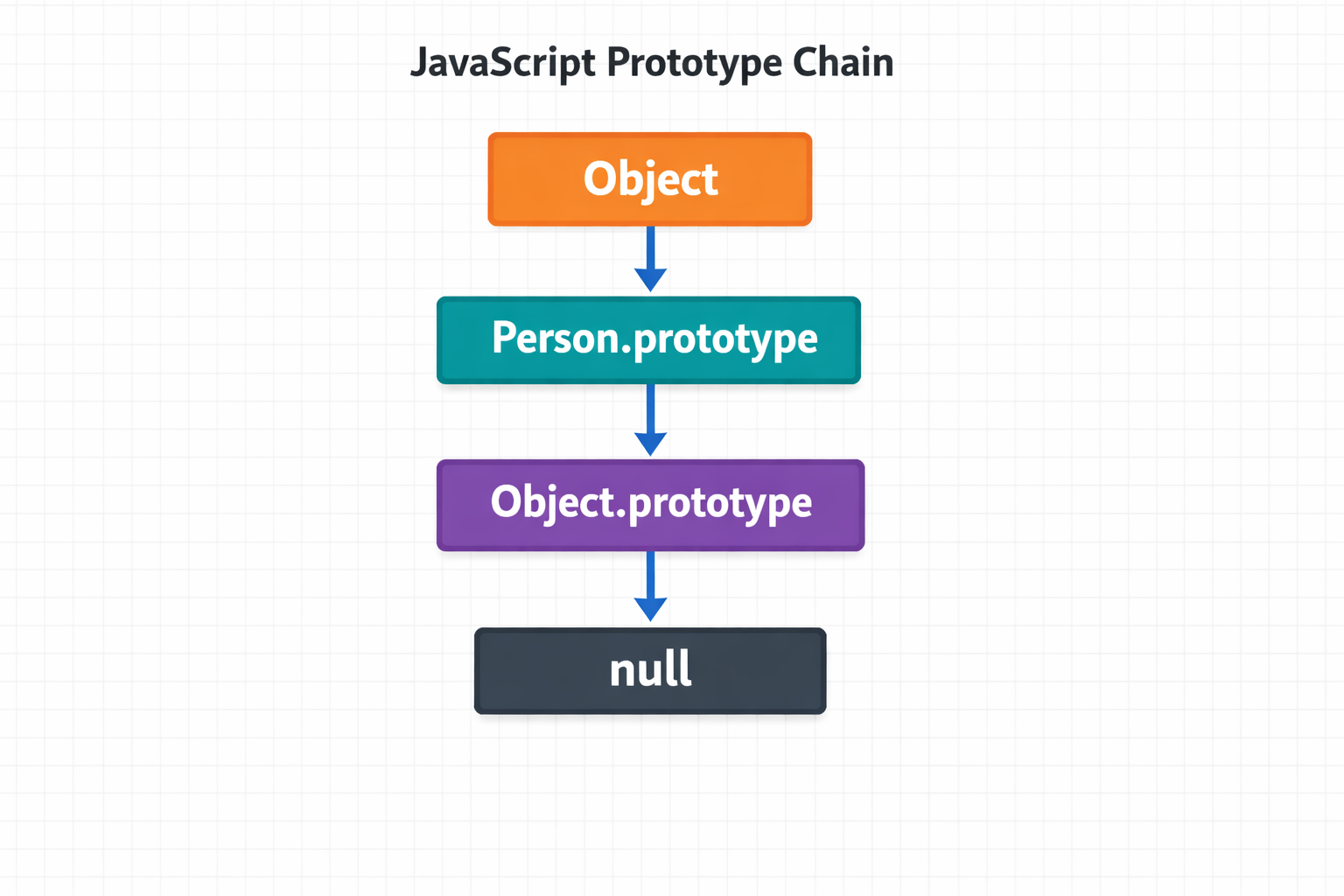
JavaScript mein classes nahi, prototypes se inheritance hota hai.
Simple Example
function Person(name) {
  this.name = name;
}

Person.prototype.greet = function() {
  console.log("Hello, I am " + this.name);
};

const shrikant = new Person("Shrikant");
shrikant.greet();
Prototype Chain Visual:
Modern ES6 Class Way
class Student {
  constructor(name) { this.name = name; }
  study() { console.log(this.name + " is studying"); }
}
4. Event Loop – JS Asynchronous Magic
JavaScript single-threaded hai, lekin async code smoothly chalta hai – iska credit Event Loop ko jaata hai.
Main Parts:
- Call Stack (Synchronous code)
- Web APIs (setTimeout, fetch, DOM)
- Callback Queue & Microtask Queue
- Event Loop
Example Code
console.log("Start");

setTimeout(() => console.log("Timeout"), 0);

Promise.resolve().then(() => console.log("Promise"));

console.log("End");

// Output:
// Start
// End
// Promise
// Timeout ┌─────────────────────┐
│ CALL STACK │
│ (Sync Code Runs) │
└─────────┬───────────┘
│
▼
┌─────────────────────┐
│ WEB APIs │
│ (setTimeout, fetch, │
│ DOM events, etc.) │
└───────┬───────┬─────┘
│ │
┌──────────────┘ └──────────────┐
▼ ▼
┌─────────────────────┐ ┌─────────────────────┐
│ CALLBACK QUEUE │ │ MICROTASK QUEUE │
│ (setTimeout, etc.) │ │ (Promises, then) │
└─────────┬───────────┘ └─────────┬───────────┘
│ │
└──────────────┬──────────────────┘
▼
┌─────────────────────┐
│ EVENT LOOP │
│ (Check Stack First)│
└─────────┬───────────┘
│
▼
┌─────────────────────┐
│ CALL STACK │
│ (Execute Tasks) │
└─────────────────────┘Pro Tip: Microtasks (Promise.then) Macrotasks (setTimeout) se pehle execute hote hain.
5. Promises – Future Values Handle Karna
Promise teen states mein hota hai: Pending → Fulfilled → Rejected
Basic Promise
const fetchData = new Promise((resolve, reject) => {
  setTimeout(() => resolve("Data aa gaya!"), 2000);
});

fetchData.then(result => console.log(result));
6. async/await – Sabse Clean Way (2026 Favorite)
async/await Promises ka sugar syntax hai – code synchronous jaisa dikhta hai.
async function getUser() {
  try {
    const res = await fetch("https://theeasymaster.com/api");
    const data = await res.json();
    console.log(data);
  } catch (err) {
    console.log("Error:", err);
  }
}

getUser();
7. Sab Topics Ek Saath – Practical Example
function createCounter() { ... } // Closure

async function main() {
  console.log("Start");
  const data = await new Promise(resolve => setTimeout(() => resolve("Done"), 1000));
  console.log(data);
  createCounter()();
}

main();
Common Mistakes & Pro Tips
- var use karne se hoisting bugs
- Closure mein loop variable galat capture
- Promise reject ko catch na karna
- async function ke andar await bhool jaana
Pro Tip: Hamesha try…catch async/await ke saath use karo.
Conclusion
Doston, aaj aapne JavaScript ke sabse powerful aur confusing topics deeply samajh liye – Closures, Promises, async/await, Event Loop, Prototype Chain aur var/let/const.
Ab aap confident ho kar interviews de sakte ho aur real projects bana sakte ho.
Action Step: Aaj hi ek chhota project banao – Private Counter using Closure + async data fetch with async/await. CodePen pe upload karke link comment mein daal do!
Agar koi doubt ho ya kisi topic ka extra example chahiye, toh comment zaroor karna. Main help karunga.
Happy Coding!
Additional Resources
For those interested in expanding their skills with APIs, check out our Top 10 Free APIs for Practice in 2025 and improve your JavaScript mastery with our Master ES6 JavaScript – Complete Guide at Master ES6 JavaScript – Complete Guide.
Views: 519