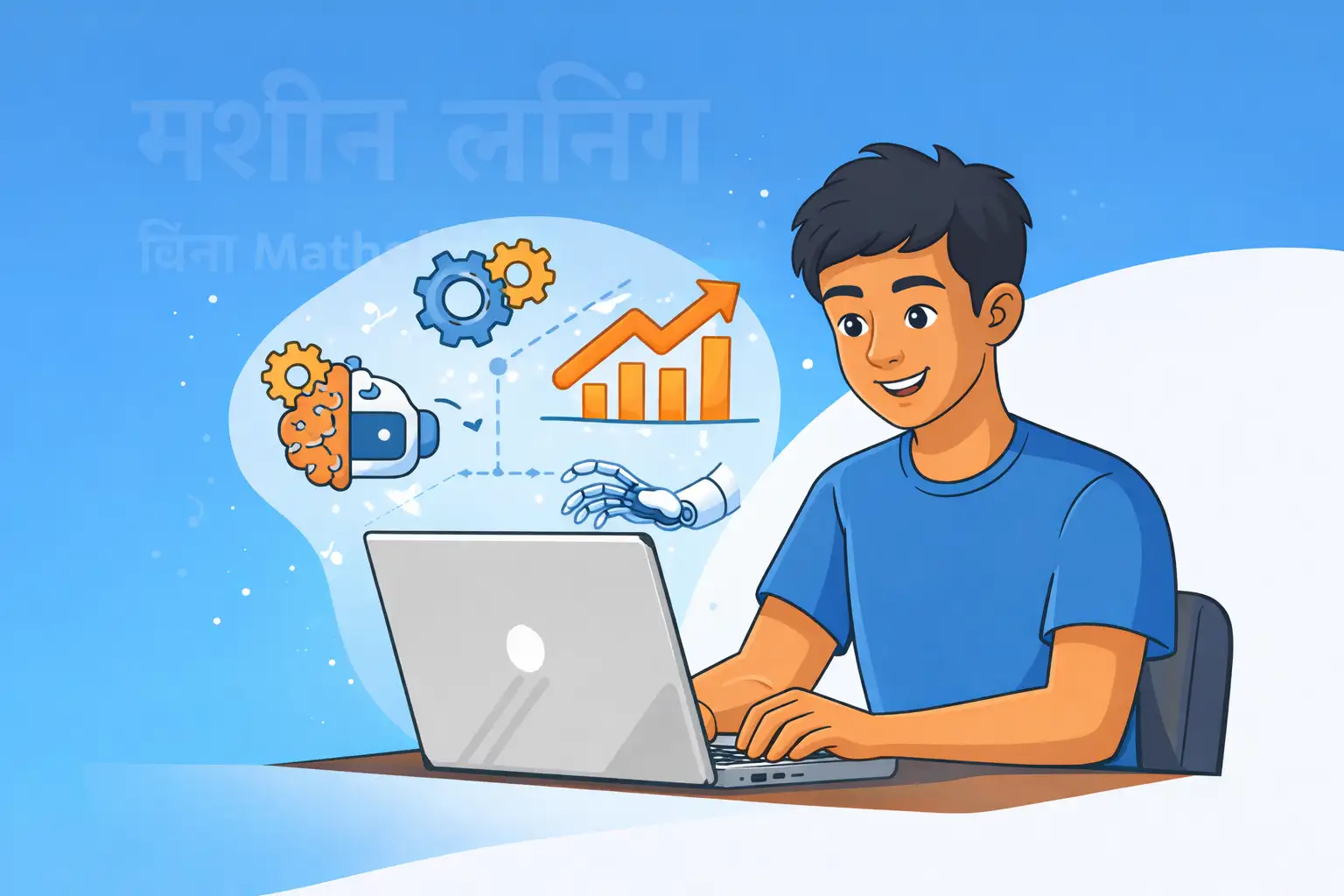
नमस्ते दोस्तों! आज हम समझेंगे Machine Learning Basics in Hindi – यानी मशीन लर्निंग की बुनियादी बातें। अगर आपने AI Fundamentals पढ़ा है, तो अब समय है ML को गहराई से समझने का। हम बिना Maths Phobia के ML सीखेंगे – real‑life examples, simple analogies, और step‑by‑step guide के साथ। चाहे आप student हों, कॉलेज फ्रेशर, या career change करना चाहते हों – यह article आपके लिए है।
1. Machine Learning Basics – क्या है ML?
Machine Learning (ML) Artificial Intelligence (AI) का एक subset है। ML में हम मशीन को डेटा से खुद सीखने की क्षमता देते हैं – बिना हर बार explicit instructions दिए।
Simple definition:
ML एक ऐसा तरीका है जिससे कंप्यूटर past data के आधार पर patterns पहचानता है और future predictions करता है।
Example:
अगर आप किसी बच्चे को सेब और संतरा पहचानना सिखाना चाहते हैं, तो आप उसे 100 सेब और 100 संतरे दिखाएंगे। वह खुद रंग, आकार, और बनावट से फर्क समझ जाएगा। ML बिल्कुल ऐसे ही काम करता है – लाखों उदाहरण दिखाकर, मशीन खुद rules बना लेती है।
2. Machine Learning क्यों है इतना popular?
- Automation: ML मॉडल repetitive tasks को बिना थके कर सकते हैं (e.g., spam filtering, fraud detection).
- Accuracy: इंसानों से ज्यादा सटीकता से patterns पहचान सकते हैं (e.g., medical image analysis).
- Scalability: जैसे‑जैसे डेटा बढ़ता है, ML models और बेहतर होते जाते हैं।
- Real‑time decisions: सेकंडों में predictions (e.g., loan approval, product recommendation).
Interesting fact: आपके smartphone का keyboard जो next word suggest करता है – वह ML का ही कमाल है। Gmail का spam filter, YouTube की recommendations – सब ML पर चलते हैं।
3. Types of Machine Learning – Supervised, Unsupervised, Reinforcement
ML को तीन main types में बांटा गया है। आइए हर एक को simple analogy से समझते हैं:
Supervised Learning (पर्यवेक्षित शिक्षण)
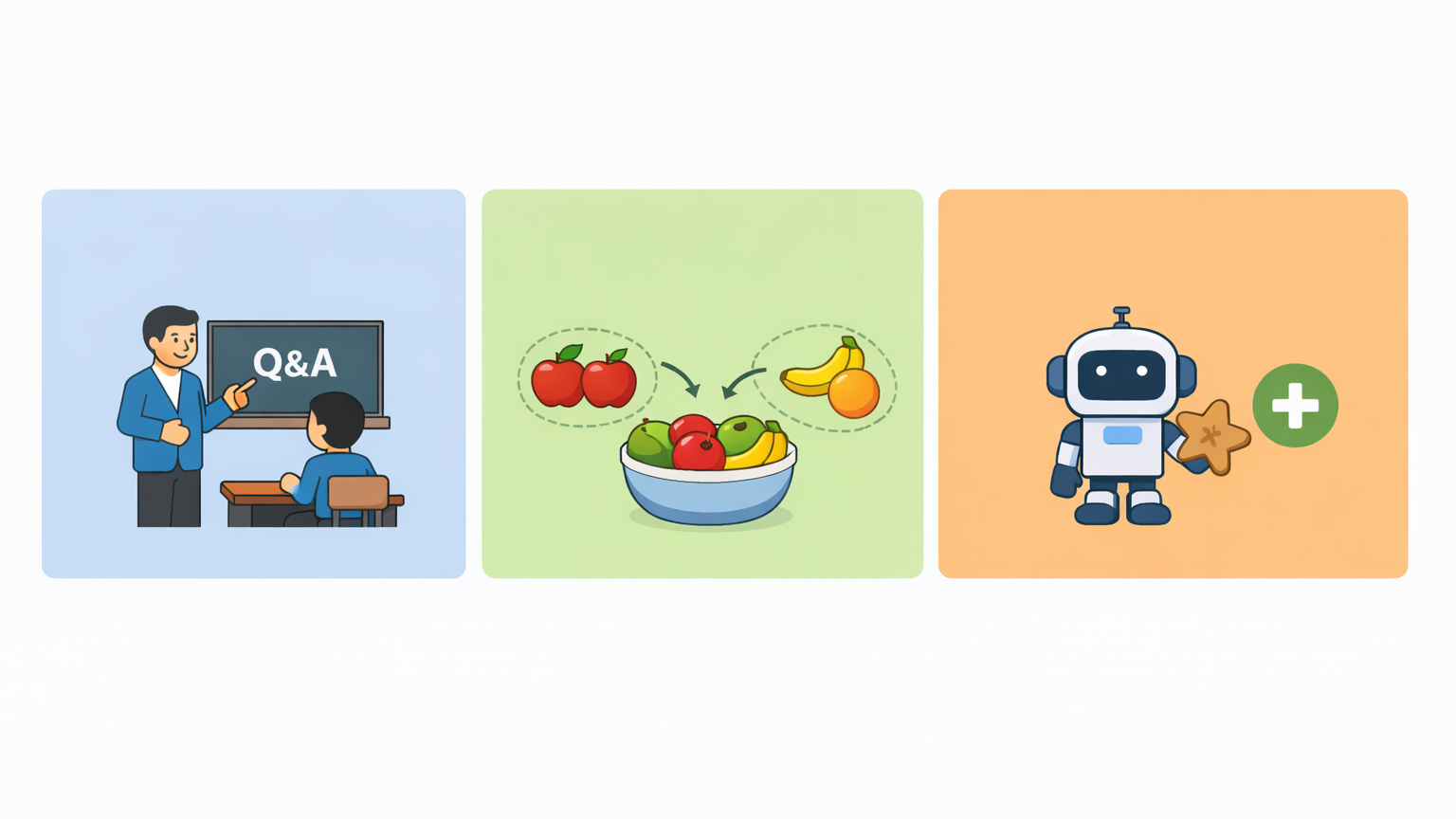
- Analogy: एक teacher के साथ exam की तैयारी। Teacher आपको questions और उनके correct answers दोनों देता है।
- How it works: Model को labelled data (input + correct output) दिया जाता है। Model सीखता है कि input से output कैसे map करें।
- Examples: Spam detection (email → spam/not spam), house price prediction, handwritten digit recognition.
- Subtypes: Regression (continuous output – price, temperature) और Classification (category – cat/dog, yes/no).
Unsupervised Learning (बिना पर्यवेक्षण के शिक्षण)
- Analogy: बिना teacher के, आपको एक डिब्बे में ढेर सारे फल मिलते हैं। आप खुद उनके रंग, आकार के आधार पर groups बना लेते हैं।
- How it works: Model को unlabelled data दिया जाता है। Model खुद patterns और groupings ढूंढता है।
- Examples: Customer segmentation (जैसे Flipkart आपको “frequently bought together” सुझाता है), anomaly detection (fraud transaction).
- Subtypes: Clustering (grouping) और Association (finding rules).
Reinforcement Learning (सुदृढीकरण शिक्षण)
- Analogy: एक dog trainer जैसे – dog सही काम करता है तो treat (reward), गलत करता है तो ignore या सजा। Dog खुद सीख जाता है कि reward पाने के लिए क्या करना है।
- How it works: Model (agent) environment में actions लेता है, reward या penalty पाता है, और maximise reward करना सीखता है।
- Examples: Game playing AI (AlphaGo, Chess bots), self‑driving cars, robotics.
4. Real‑life Examples of Machine Learning
| Domain | Example | ML Type |
|---|---|---|
| E‑commerce | “Customers who bought this also bought…” (Amazon) | Unsupervised (Association) |
| Social Media | Face recognition in Facebook photos | Supervised (Classification) |
| Banking | Credit card fraud detection | Supervised (Anomaly detection) |
| Healthcare | Cancer detection from X‑rays | Supervised (Classification) |
| Entertainment | Netflix/YouTube recommendations | Unsupervised + Reinforcement |
| Autonomous Vehicles | Self‑driving cars (Tesla) | Reinforcement Learning |
| Language Translation | Google Translate | Supervised (Sequence‑to‑sequence) |
| Virtual Assistants | Siri, Google Assistant | Supervised + Reinforcement |
5. Machine Learning vs AI vs Deep Learning – अंतर
ये terms अक्सर confuse करते हैं। आइए साफ करते हैं:
- AI (Artificial Intelligence) – सबसे बड़ा umbrella term। कोई भी मशीन जो इंसानी बुद्धि की नकल करे – rules‑based systems, search algorithms, ML, DL सब AI के अंदर आते हैं।
- Machine Learning – AI का एक subset। मशीन डेटा से सीखती है, बिना explicit programming के। ML की जरूरत तब पड़ती है जब rules को manually लिखना मुश्किल हो (जैसे image recognition).
- Deep Learning – ML का एक subset। इसमें artificial neural networks (multiple layers) का उपयोग होता है। यह बहुत बड़े डेटा पर काम करता है और feature extraction खुद करता है। Deep Learning ही ChatGPT, image generation, self‑driving cars जैसे advanced tasks को संभव बनाता है।
Simple analogy:
- AI = पूरा animal kingdom
- ML = mammals (जानवरों का एक समूह जो सीख सकते हैं)
- Deep Learning = humans (mammals का सबसे intelligent समूह)
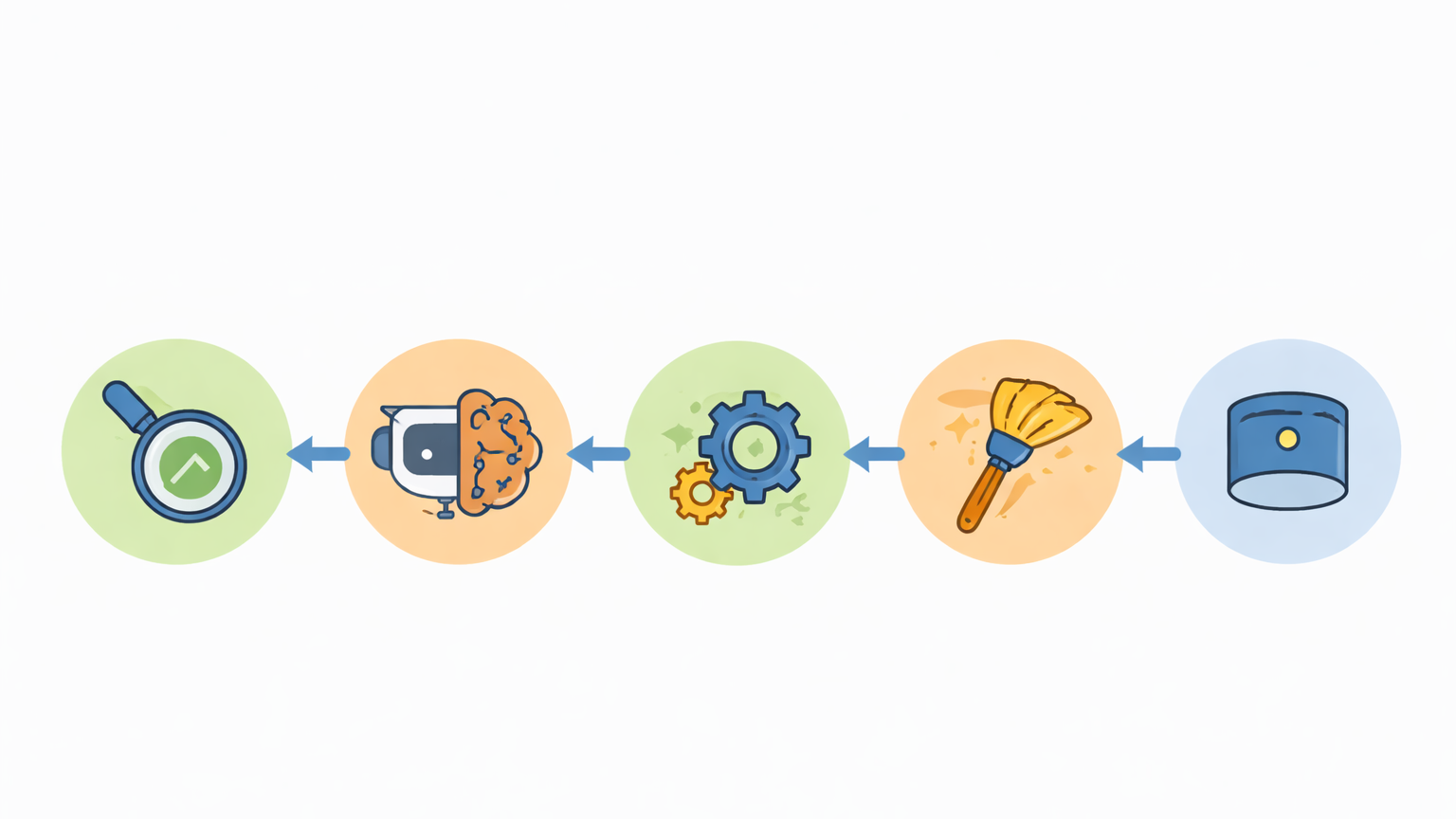
6. How Machine Learning Works – Simple 5‑Step Process
Step 1: Data Collection
ML के लिए डेटा सबसे जरूरी है। डेटा databases, APIs, CSV files, web scraping से इकट्ठा किया जाता है।
Step 2: Data Preparation
Data को clean करना – missing values हटाना, duplicates, formatting, normalization. यह step सबसे time‑consuming है (60‑80% of project time).
Step 3: Choose a Model
Problem type के हिसाब से algorithm select करना। Regression के लिए Linear Regression, Classification के लिए Decision Trees / SVM, Clustering के लिए K‑Means, आदि।
Step 4: Training
Model को data (features + labels) feed करना। Model अपने weights adjust करता है ताकि predictions सही हों। Training के बाद model एक mathematical representation बन जाता है।
Step 5: Evaluation & Tuning
Model को नए, unseen data पर test करना। Accuracy, precision, recall जैसे metrics से evaluate करना। Hyperparameters tune करके performance improve करना।
Final Step: Deployment
Model को real‑world application (app, website, API) में integrate करना।
7. Machine Learning Engineer बनने के लिए Skills
आपको ML engineer बनने के लिए इन skills की जरूरत होगी:
| Skill | Why Important | How to Start |
|---|---|---|
| Python | Most popular ML language | Learn basics: variables, loops, functions, then libraries (NumPy, Pandas) |
| Mathematics | Linear Algebra, Calculus, Probability, Statistics | Start with high school level – don’t need advanced |
| ML Algorithms | Understand how models work | Learn from scikit‑learn documentation and YouTube |
| Data Preprocessing | Cleaning, transformation, feature engineering | Practice on Kaggle datasets |
| Model Evaluation | Metrics, cross‑validation, overfitting/underfitting | Learn train‑test split, confusion matrix |
| Frameworks | Scikit‑learn, TensorFlow, PyTorch | Start with scikit‑learn, then move to deep learning |
| SQL | Extract data from databases | Basic SELECT, JOIN, GROUP BY |
| Communication | Explain results to non‑tech stakeholders | Practice writing reports and giving presentations |
Good news: आपको expert mathematician बनने की जरूरत नहीं। 80% real‑world ML projects basic statistics और intuition से solve हो जाते हैं।
Python For Beginners – In Hindi
Data Science Fundamentals in Hindi: 2026 Complete Guide
8. बिना Maths Phobia के ML कैसे सीखें?
Maths से डर लगता है? ये 5 tips आपके लिए:
- Start with intuition, not equations – पहले समझें “क्यों” और “कब” use करना है, formula बाद में।
- Example: Linear Regression को “best fit line” के तौर पर समझें, slope/intercept के formula में बाद में जाएं।
- Use no‑code/low‑code tools – Google’s Teachable Machine, Microsoft Lobe, Orange – ये tools बिना coding के ML concepts सिखाते हैं।
- Practice on small datasets – इंडियन Premier League (IPL) data, COVID data, या अपने college के marksheet data पर try करें।
- Watch visual explanations – YouTube channels like “StatQuest with Josh Starmer” (English), “CampusX” (Hindi), “CodeWithHarry” (Hindi) – वो cartoons और animations से concepts समझाते हैं।
- Build projects as you learn – “Predict house prices”, “Classify flowers”, “Recommend movies” – ऐसे छोटे projects confidence बढ़ाते हैं।
Google’s “Machine Learning Crash Course” – free, hands‑on, no advanced maths required.
9. Free Resources & Courses (Hindi/English)
| Platform | Course / Resource | Language | Link |
|---|---|---|---|
| Machine Learning Crash Course | English | Link | |
| Stanford (Andrew Ng) | Machine Learning Specialization (Coursera) | English | Link |
| Kaggle | Intro to Machine Learning (free course) | English | Link |
| NPTEL | Introduction to Machine Learning (IIT) | English + Hindi subtitles | Link |
| YouTube | CampusX – Machine Learning Playlist | Hindi | Link |
| YouTube | CodeWithHarry – Machine Learning Tutorial | Hindi | Link |
| YouTube | StatQuest with Josh Starmer | English (visual) | Link |
| Free Book | “Introduction to Machine Learning with Python” by Andreas Mueller | English | Link |
10. निष्कर्ष – क्या आप ML सीख सकते हैं?
आज हमने Machine Learning Basics in Hindi को समझा – ML क्या है, types, real‑life examples, AI और Deep Learning से अंतर, 5‑step workflow, required skills, और free resources।
Machine Learning कोई जादू नहीं है; यह data, algorithms, और patience का परिणाम है। और सबसे अच्छी बात – आपको advanced maths या computer science degree की जरूरत नहीं है। Curiosity, consistency, और practice से कोई भी ML सीख सकता है।
आपकी पहली step क्या होगी? नीचे comment में बताइए – क्या आप Supervised Learning से शुरुआत करेंगे, या सीधा Deep Learning में jump करेंगे?
अगर यह guide useful लगी, तो इसे share करें ताकि आपके दोस्त भी Machine Learning की दुनिया में कदम रख सकें।
Additional Resources
-

7. Machine Learning Basics in Hindi: बिना Maths Phobia के ML सीखें (2026 Guide)
नमस्ते दोस्तों! आज हम समझेंगे Machine Learning Basics in Hindi – यानी मशीन लर्निंग की बुनियादी बातें। अगर आपने AI Fundamentals पढ़ा है, तो अब समय है ML को गहराई से समझने का। हम बिना Maths Phobia के ML सीखेंगे – real‑life examples, simple analogies, और step‑by‑step guide के साथ। चाहे आप student हों, कॉलेज फ्रेशर, या…
-
6. AI Fundamentals in Hindi: बिना Coding के AI कैसे काम करता है?
नमस्ते दोस्तों! आज हम समझेंगे AI fundamentals यानी Artificial Intelligence की बुनियादी बातें। अगर आपने सोचा है कि AI सिर्फ coders के लिए है, तो ये article आपके लिए है। हम बिना coding के AI की दुनिया समझेंगे और जानेंगे कि ChatGPT, Gemini जैसे tools कैसे काम करते हैं। इस गाइड को पढ़ने के बाद आपको AI…
-
5. Which Job to Learn in 2026? Easy Career Guide for Students
नमस्ते दोस्तों! स्वागत है The Easy Master पर। 🚀 साल 2026 है और करियर के बहुत सारे options हैं। लेकिन सही choice करना थोड़ा मुश्किल लग सकता है।इस guide में हम बात करेंगे which job to learn in 2026 – सीधी, आसान भाषा में। ये सवाल which job to learn in 2026 हर student के मन में होता है, और हम…