
नमस्ते दोस्तों! स्वागत है The Easy Master पर। 🚀
आप ChatGPT, Gemini, या किसी भी AI tool का use करते होंगे। लेकिन कभी ऐसा हुआ है कि AI ने आपको गलत, बेकार या बहुत general answer दिया?
Iska sabse bada reason hai – आपका prompt सही नहीं था।
सही how to write AI prompts सीखना एक skill है। जितना अच्छा prompt दोगे, उतना अच्छा output मिलेगा। ये guide आपको beginner से expert तक ले जाएगी – Hinglish examples और real use-cases के साथ।
चलिए शुरू करते हैं और सीखते हैं how to write AI prompts को मास्टर करना! 💡
Table of Contents
1. Why Learning How to Write AI Prompts is Essential in 2026
AI tools are powerful, but they are also literal. They give you exactly what you ask for. Agar aapka prompt unclear hai, toh output bhi unclear hoga. Yeh principle है: GIGO – Garbage In, Garbage Out.
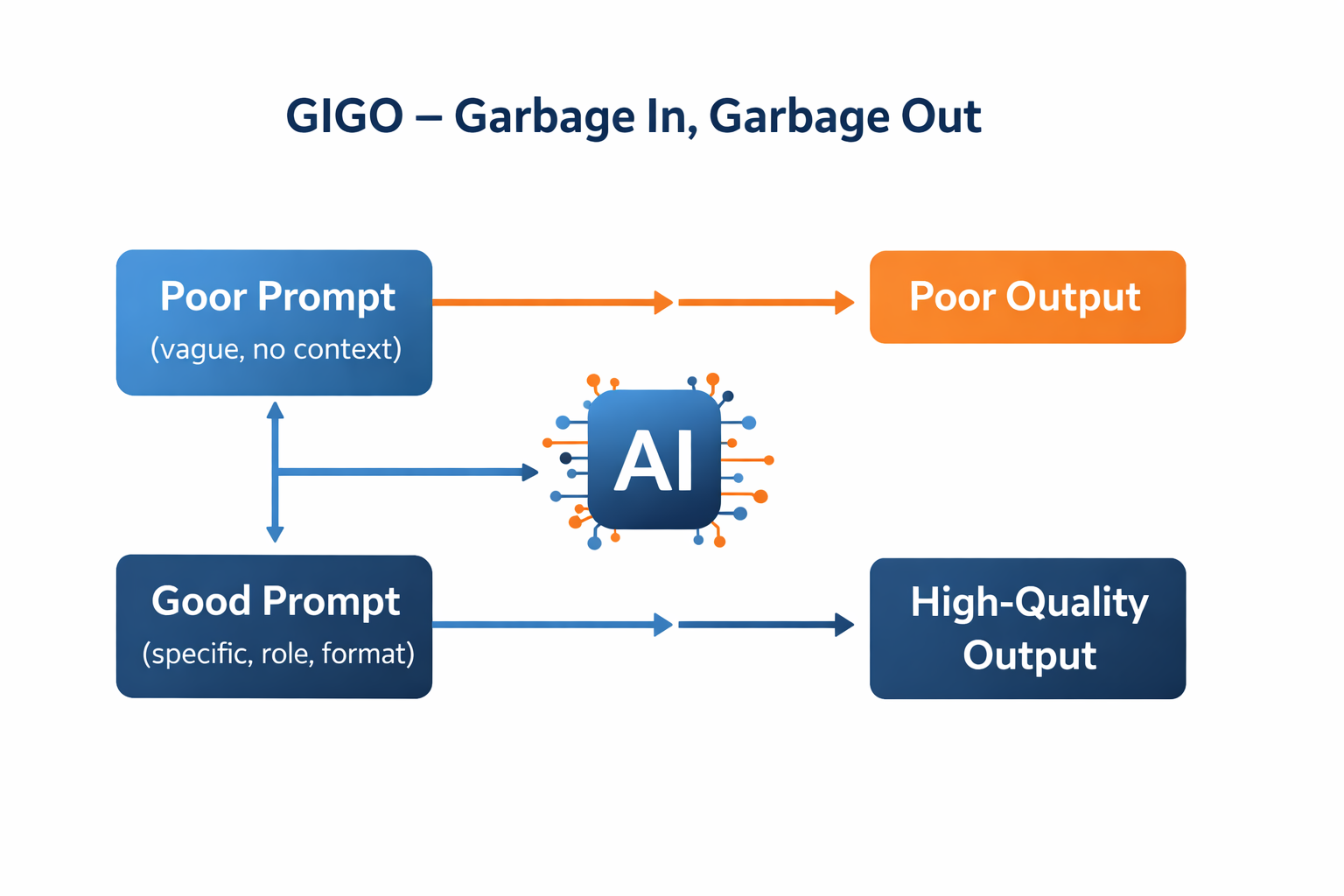
Benefits of mastering how to write AI prompts:
- Time saving: Sahi prompt = pehli baar mein sahi answer.
- Better accuracy: Less hallucinations, more relevant information.
- More creativity: You can guide AI to write in specific styles, tones, formats.
- Higher productivity: Use AI for complex tasks like coding, research, content creation.
2. Level 1: Beginner – Basic Prompts (The What)
Beginner level par hum AI se simple, direct questions poochte hain. Ye tab kaam karta hai jab topic bahut simple ho.
Examples:
- “What is the capital of India?”
- “Write a short story about a cat.”
- “Explain photosynthesis.”
Limitations:
Output often too generic. Agar topic complex hai, toh answer superficial ho sakta hai. Koi context, tone, ya format specify nahi hota.
Tips for Beginners:
- Ek hi baat poocho, multiple questions ek saath mat pucho.
- Clear language use karo.
- Agar answer acha nahi lage, toh rephrase karo.
3. Level 2: Intermediate – Adding Context (The How)
Is level par aap AI ko role, tone, format, background provide karte ho. Structure use karo:
[Role] + [Task] + [Details] + [Format]
Examples:
- “Act as a history teacher. Explain the causes of World War I in 3 bullet points.”
- “Write a formal email to a professor requesting a recommendation letter. Include my name: Riya, course: B.Com.”
- “You are a career counselor. Suggest 3 career paths for a student who likes coding and design. Keep it short.”
Why it works:
AI ko context milta hai ki kaise respond karna hai, kis style mein, kis detail level par.
Pro Tip: “Act as…” se shuru karo. Ye persona technique AI को specific role adopt karne ka instruction deti hai.
4. Level 3: Advanced – Chain of Thought & Iterative Refinement
Advanced level mein aap AI ko step-by-step sochne ke liye bolte ho. Complex tasks ko break down karte ho. Aur pehle answer ke base par refine karte ho.
Chain of Thought Prompting:
- “Solve this math problem step by step: If a train travels 60 km in 1.5 hours, what is its speed?”
- “Plan a study schedule for JEE. First list all important topics. Then allocate time per day. Then create a weekly plan.”
Iterative Refinement:
Pehle simple prompt do, phir response dekh ke improve karo.
- Prompt 1: “Write a blog intro about AI prompts.”
- Prompt 2 (based on output): “Make it more engaging, add a question to hook the reader.”
Is tarah aap AI ke saath collaborate karte ho, ek final output banane ke liye.
5. Level 4: Expert – System Prompts, Personas & Advanced Techniques
Expert level par aap system-level instructions dete ho, consistent personas use karte ho, aur few-shot prompting ka istemal karte ho.
System Prompts:
Agar aap ek long conversation kar rahe ho, toh shuruaat mein bata do ki AI kaise behave kare.
- “You are an expert Python tutor. Always explain code with comments. Use simple language.”
Few-Shot Prompting:
AI ko do-do examples de do jaisa output chahiye.
- “Here are two examples of professional LinkedIn messages. Write a third one for a marketing internship application.”
(Provide examples)
Complex Personas:
- “You are a skeptical scientist. I will give you a claim; you question it with evidence.”
Expert level par aap AI ko apne custom assistant ki tarah shape kar sakte ho, jo consistent style aur depth ke saath respond kare.
6. Prompt Writing for Different Use Cases (with Examples)
Study & Exam Prep
- “Summarize this chapter on photosynthesis in 5 bullet points for a Class 10 student.”
- *“Create 10 multiple-choice questions on the French Revolution with answers.”*
- “Explain the working of a transistor like I’m 10 years old.”
- *“Make a 30-day study plan for NEET with my weak topics: Physics, Organic Chemistry.”*
👉 Internal link: For more study tools, see Top AI Tools for Students 2026.
Coding
- “Write a Python function to check if a number is prime. Add comments.”
- “Debug this code: [paste code]. Explain the error and fix it.”
- “Act as a senior developer. Review my code and suggest improvements.”
👉 Internal link: Deep dive with ChatGPT से coding कैसे करें.
Career & Internship
- “Write a cover letter for a marketing intern role at XYZ company. Mention my skills: Canva, social media, communication.”
- “Act as an HR interviewer. Ask me common fresher interview questions for a finance role.”
- “Write a LinkedIn connection request to a hiring manager at ABC company. I am a B.Tech student interested in software development.”
👉 Internal link: Full strategy in How to use AI to get internship in 2026.
Content Creation
- “Brainstorm 10 blog topics for a website about AI tools for students.”
- “Write a Facebook caption for an article about AI prompts. Keep it engaging with emojis.”
- “Create a short Instagram script for a reel about ChatGPT tips.”
Creative Writing
- *“Write a 100-word story about a time-traveling student who meets Einstein.”*
- “Write a poem in Hindi about exams and stress.”
- “Create a dialogue between a procrastinating student and a motivational AI.”
7. Common Mistakes & How to Fix Them
| Mistake | Solution |
|---|---|
| Vague prompts | Add details: what, who, tone, format. |
| Asking too many things at once | Break into separate prompts or ask step-by-step. |
| Not iterating | Refine based on AI’s response. Use follow-up prompts. |
| Ignoring tone/audience | Specify “formal”, “funny”, “for beginners”, etc. |
| Expecting perfect first answer | AI is a collaborator, not a mind reader. Refine. |
8. Tools to Help You Write Better Prompts
- ChatGPT itself: Ask it to help refine your prompt. Example: “I want to ask about [topic]. Help me write a better prompt.”
- PromptPerfect: AI prompt optimizer (free tier available).
- FlowGPT: Community-shared prompts for inspiration.
- Notion AI / Canva AI: For specific use-cases.
👉 Internal link: More tools in Top AI Tools List (2026).
9. Conclusion – Practice Makes Perfect
Doston, how to write AI prompts is a skill that improves with practice. Aaj aap beginner se lekar expert level tak ke techniques seekh chuke hain.
Action step:
Ek simple task lein – jaise “write a study plan” – aur use karte hue level 1 se level 4 tak ke prompts apply karein. Dekhein kaise output improve hota hai.
Agar aapko kisi specific use-case ke liye prompt chahiye, comment mein zaroor poochiye. Main help karunga.
Happy prompting! ✍️🤖
10. Bonus: Prompt Templates Cheat Sheet
| Purpose | Template Example |
|---|---|
| Summarize | “Summarize [text/book] in [number] bullet points for a [audience].” |
| Explain | “Explain [concept] like I’m [age/level]. Use simple language.” |
| Generate questions | “Create [number] [MCQ/essay] questions on [topic] with answers.” |
| Write code | “Write a [language] function to [task]. Add comments.” |
| Debug | “Debug this code: [paste]. Explain the error and fix it.” |
| Create plan | “Create a [time]-day study plan for [exam]. Include daily tasks.” |
| Role play | “Act as a [role]. [Task].” |
| Polish text | “Rewrite this in a [tone] tone: [text].” |
| Brainstorm | “Brainstorm [number] ideas for [project/topic].” |
| Refine prompt | “Help me write a better prompt for [goal].” |